Table of contents
Citizenship is supposed to settle the question of belonging, yet for millions of people it does not. In 2024 and 2025, as record displacement, remote work, and tighter borders reshaped mobility, researchers and policymakers kept returning to the same paradox: naturalisation rates rise in many countries, but feelings of “home” do not necessarily follow. From London to Toronto and from Paris to Sydney, the most persistent unease is not always legal, it is social and psychological, rooted in the daily experience of recognition, security, and identity.
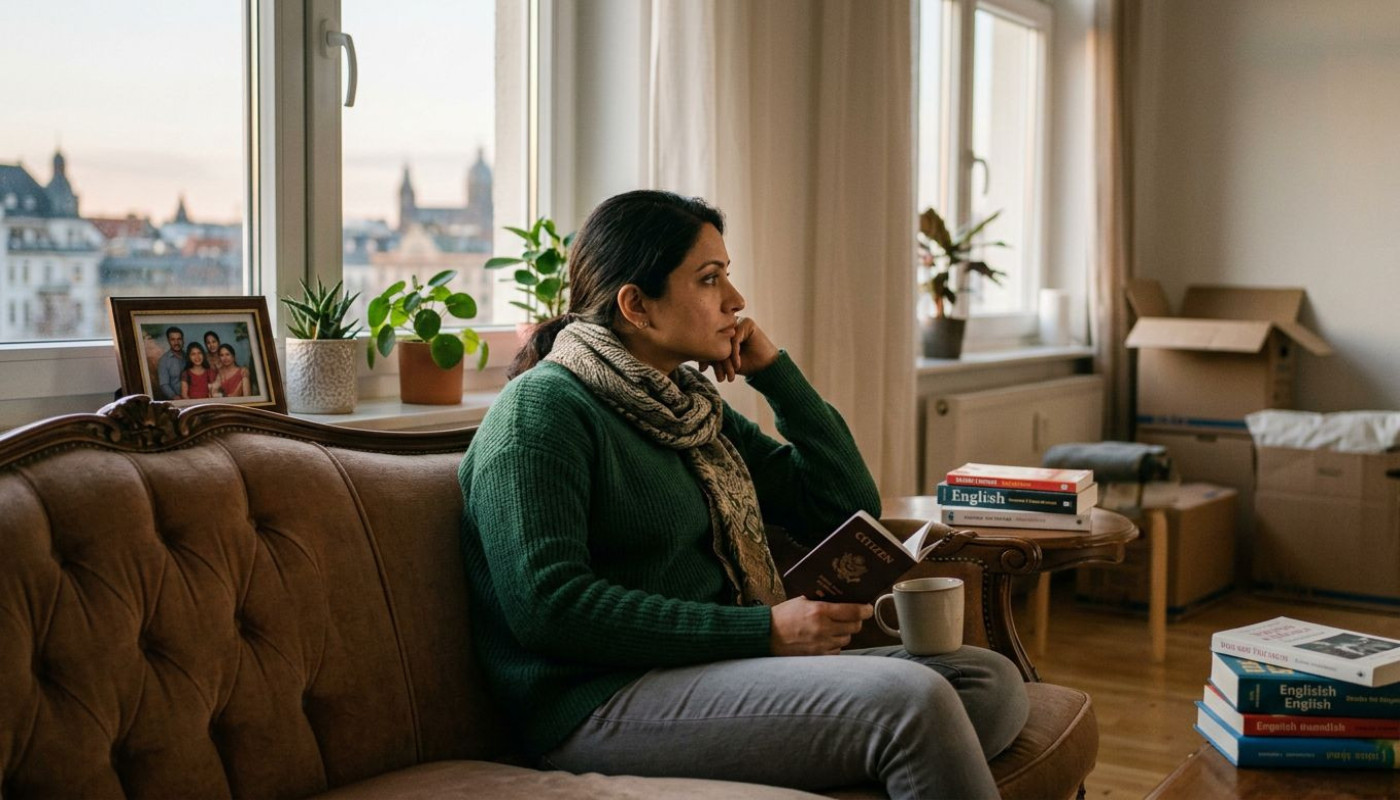
Citizenship papers, belonging still pending
How can a passport feel insufficient? In many democracies, citizenship is the final administrative step after years of residence, language tests, fees, and background checks, yet the promise it carries, equal membership, often collides with lived reality. Surveys repeatedly show a gap between legal inclusion and social acceptance, especially for racialised minorities and first-generation migrants, and the gap can persist for decades. In the European Union, Eurobarometer work on discrimination has consistently found sizeable shares of respondents reporting ethnic or racial discrimination, while in the United States, the Pew Research Center has documented how experiences of bias vary sharply by race and immigrant background, shaping trust in institutions and neighbours alike.
The problem is not abstract. Housing access, workplace advancement, and everyday interactions in public spaces are where “home” is negotiated. A new citizen can still face higher rental rejection rates, stronger police scrutiny, and slower career progression, patterns that academic meta-analyses have repeatedly identified across Western labour markets. Even when discrimination is subtle, the cumulative effect matters, as social psychologists describe “belonging uncertainty”, a chronic sense that acceptance is conditional and can be withdrawn. When citizenship does not noticeably change those interactions, some people conclude that the document is real, but the membership is fragile.
There is also the weight of expectations. Naturalisation is often framed, by states and by families, as the end of a journey, yet many migrants describe it as the start of a different kind of pressure: to prove loyalty, to speak flawlessly, to take jokes lightly, to answer questions about “where you’re really from”. In countries with politicised debates on immigration, citizens with migrant backgrounds can find themselves used as symbols in culture wars, praised when convenient and doubted when controversies erupt. Belonging then becomes something to perform, not something to inhabit.
Generational differences can sharpen the feeling. Children who grow up with citizenship from birth may still be treated as outsiders if their names, accents, or skin colour trigger assumptions, and that mismatch, “I am from here, yet I am asked to justify it”, can be emotionally corrosive. In Britain, for example, long-running research in sociology has highlighted how national identity is often imagined in ethnic terms, while in France, the universalist model can make it harder to name discrimination directly, leaving individuals to internalise it. The legal status is settled, but the question of home keeps coming back, in classrooms, offices, and family dinners.
When integration feels like erasure
At what point does fitting in become disappearing? For many new citizens, the path to acceptance is presented as “integration”, a word that can mean learning the language, understanding institutions, and participating in civic life, but in practice it sometimes implies shrinking visible difference. That can be exhausting, particularly for people who want to belong without having to cut ties with religion, heritage, or community networks. Studies on acculturation have long distinguished between integration, assimilation, separation, and marginalisation, and people tend to fare better when they can maintain cultural identity while engaging fully with the wider society; when the expectation tilts toward assimilation, well-being tends to suffer.
Workplaces can intensify this tension. In global cities, “diversity” is often celebrated, yet the unspoken norm can remain narrow: certain accents are treated as professional, certain cultural references are treated as neutral, and certain styles of communication are rewarded. Employees learn to code-switch, to soften parts of themselves, and to anticipate misunderstandings, which can bring career benefits but also a persistent sense of acting. Over time, some describe a strange trade-off: the more they succeed, the less they feel at home, because achievement has been purchased with self-censorship.
Family dynamics complicate matters further. Naturalisation may be embraced by some relatives and resented by others, especially in contexts where “taking another passport” is framed as betrayal. Diaspora communities sometimes police identity from the other side, questioning whether someone is still “one of us” after adopting a new nationality, changing a name, or raising children in a different language. The result can be a double distance, never fully accepted by the host society, yet increasingly misread by the community of origin. That in-between space can be creative and empowering, but it can also feel like permanent suspension.
Public discourse can convert private identity into a test. After terror attacks, geopolitical crises, or spikes in irregular migration, citizens from particular backgrounds can be asked to denounce events they had nothing to do with, or to take positions on foreign conflicts as if their nationality is conditional. This is one reason some people never relax into “home”: they sense that their belonging is being audited. The stress is not constant, but it is predictable, returning whenever the news cycle demands a scapegoat or a symbol.
Mobility has changed the meaning of “home”
Home is no longer a single place. The rise of dual citizenship, global careers, remote work, and cheaper travel has created a world in which many people build lives across borders, and for some, that is liberation, while for others it is disorientation. The United Nations has estimated that international migrants number in the hundreds of millions, and remittances remain a major global financial flow, both signs of enduring transnational ties. In that context, citizenship is sometimes less a marker of identity than a tool for stability, enabling travel, work rights, and security for children.
Yet the practical logic of mobility can clash with emotional needs. People who move frequently often report “serial belonging”, feeling connected in bursts, then detached again. A passport may open doors, but it does not automatically create friendships, familiar routines, or the quiet confidence of being known. Even in welcoming countries, the experience of rebuilding social networks from scratch can be lonely, and loneliness itself is increasingly recognised as a public health concern. When citizens do not feel at home, it is often because they have not had the chance, or the time, to become embedded in a community.
Another shift is the growing focus on “resilience” in an uncertain world. Climate risks, political polarisation, and economic volatility have pushed some families to diversify residency options, a trend wealth advisers and migration lawyers openly discuss. That does not mean people are disloyal; it can mean they are cautious. But living with contingency plans can change one’s relationship to any single country, turning home into something provisional, a place you occupy while watching exit routes. For those who grew up in instability, that mindset can be hard to switch off, even after becoming a citizen.
This is also where the market for second citizenship and residency programmes enters the conversation, not as a lifestyle fantasy, but as a risk-management industry. Costs vary widely by jurisdiction, processing time, and due-diligence requirements, and anyone researching the financial side will quickly encounter detailed price breakdowns, including the Vanuatu Passport Price, which is often discussed because of the programme’s speed and the way it is marketed globally. The broader point is not that mobility “solves” belonging, it is that some people respond to not feeling at home by seeking options, and options can reduce anxiety while leaving the deeper question untouched.
What actually helps people feel at home
Belonging is built, not granted. The most effective drivers are usually local and concrete: stable housing, decent work, safety, and social ties, not abstract messaging. Municipal programmes that support language learning, credential recognition, and access to childcare often have more impact than national campaigns, because they reduce the daily friction that keeps people at the margins. When foreign qualifications are recognised faster, when employers are held to clear anti-discrimination standards, and when schools have resources to support multilingual children, the sense of “this place is for me” becomes easier to believe.
Political representation matters as well. When people see leaders who share their backgrounds, or at least take their concerns seriously, trust rises. Research in political science has shown that descriptive representation can improve engagement and the perception of responsiveness, even if it is not a cure-all. The same logic applies in media: when communities are portrayed with nuance rather than as problems to be managed, the emotional climate changes. A country can have inclusive laws and still broadcast exclusion every night; citizenship cannot counteract that alone.
There is also the question of rituals and recognition. For some, the citizenship ceremony is meaningful, but what follows is more important: being treated as a neighbour, not a guest. Community organisations, sports clubs, unions, parent associations, and faith groups can provide that recognition faster than institutions can. People often begin to feel at home when they are needed, when their skills matter to others, and when they can contribute without being asked to apologise for who they are. That is why volunteering and local participation, though sometimes dismissed as soft solutions, can be pivotal.
Finally, mental health support should not be an afterthought. Migration can involve trauma, loss, and long-term stress, and even “successful” moves can carry grief for the life left behind. Countries that invest in culturally competent counselling, interpretation services, and community-based care make it easier for new citizens to process that complexity. Feeling at home is not simply about loving a flag; it is about having enough safety, dignity, and connection to stop scanning the horizon for rejection.
Practical next steps for unsettled citizens
Start locally, and budget realistically. Join one recurring community activity, review eligibility for housing or childcare support, and ask your municipality about integration services and credential recognition. If travel or dual-status planning is part of your strategy, book professional advice early, compare fees and timelines, and keep a clear savings buffer for applications, translations, and legal checks.
On the same subject

When should a server with DDOS protection be used?

What are the advantages of a chatbot for a company?

How to use Accounts Receivable Software ?

How can you find a blonde girl for sex?

Why turn to online casino platforms ?

How do I get the VisiTax receipt quickly?

The handpan: where to find the improvisational musical instrument in Finland?

Blind spot detection: which Toyota models are equipped with this system?

How to choose your handpan?
